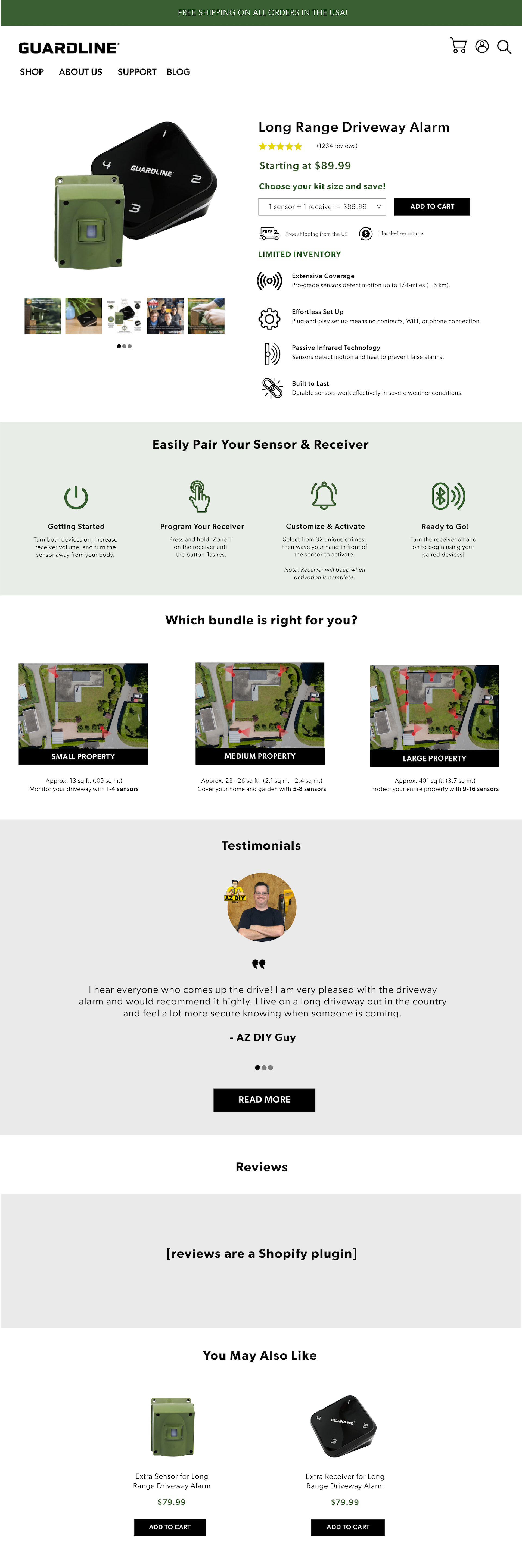
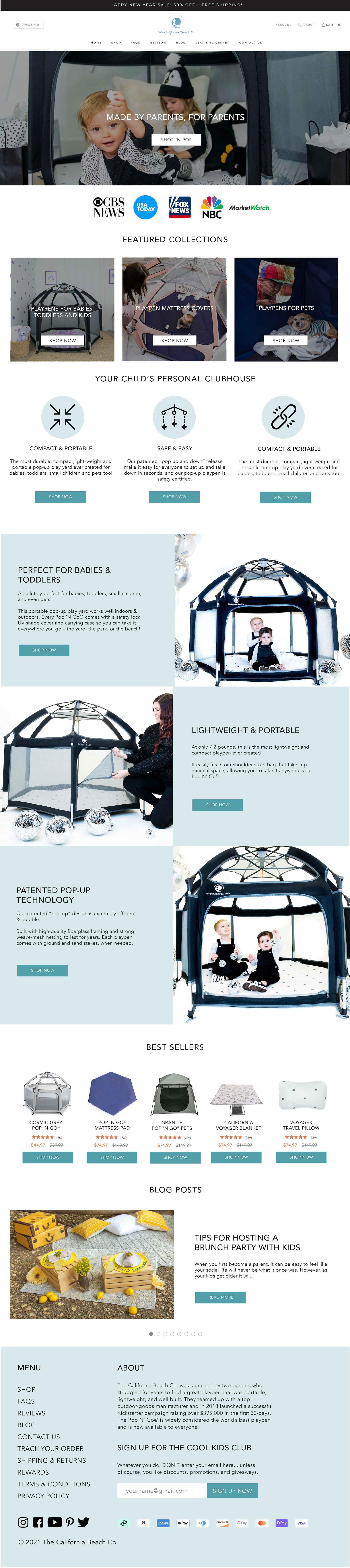
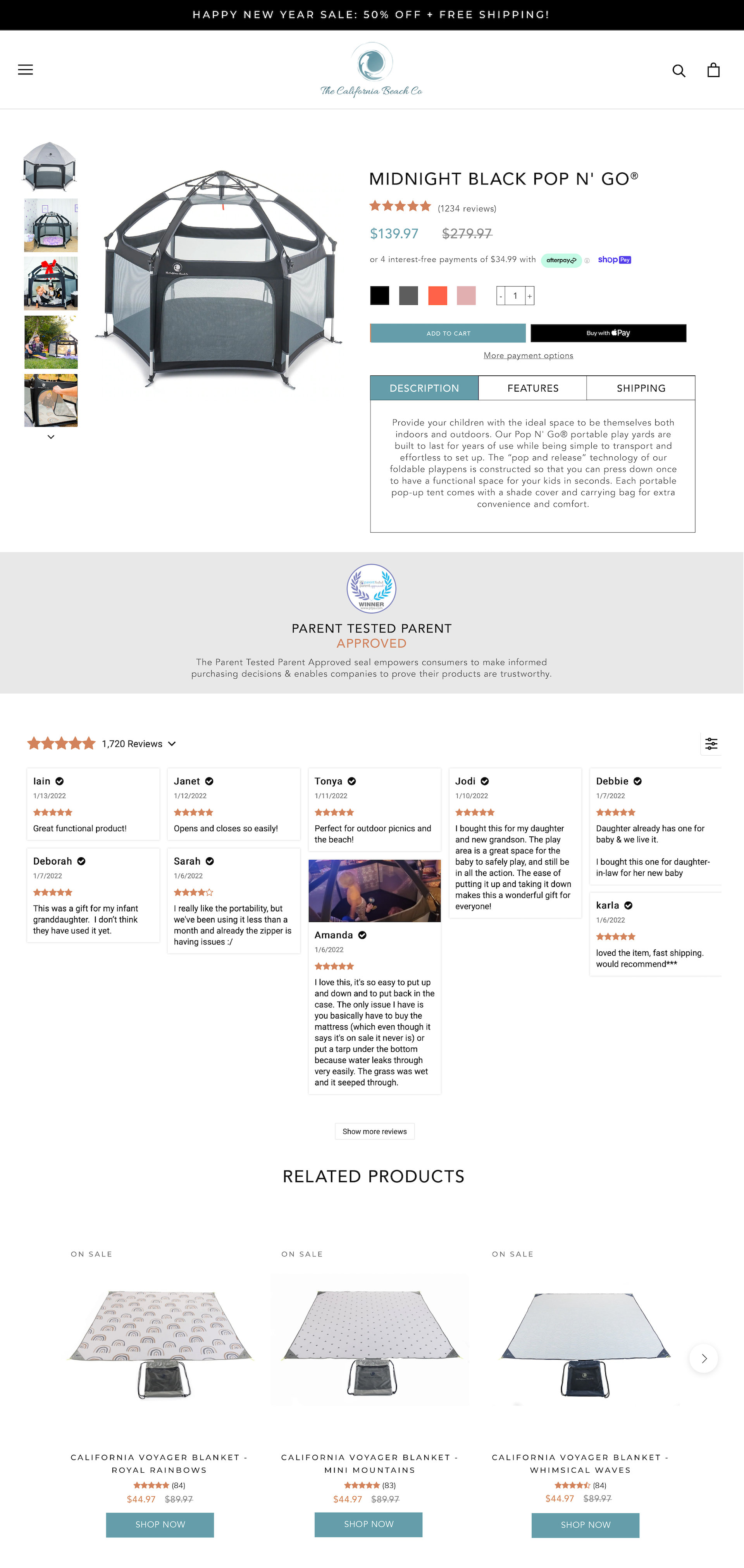
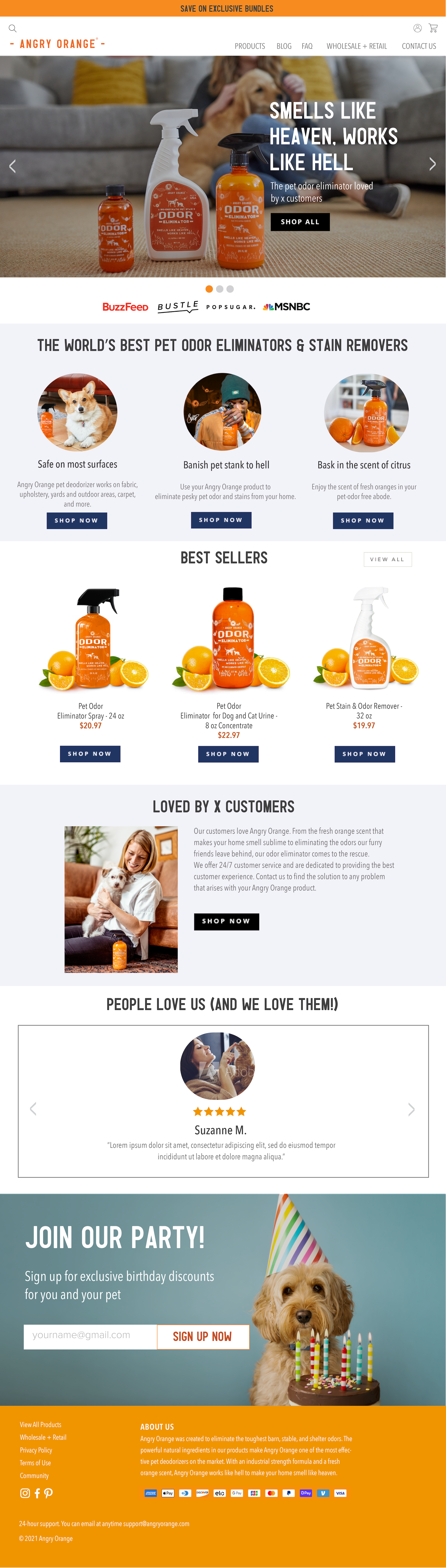
Thrasio acquires Amazon-native brands and scales them as standalone DTC businesses. I was assigned four accounts — each at a different stage of brand maturity, each selling to a completely different customer.
The design challenge wasn't just making pages look good. It was reverse-engineering what made each brand work on Amazon, then rebuilding that trust signal architecture for a direct-to-consumer context where you lose the reviews-first discovery loop.
Each brand needed a homepage that converted cold traffic and a PDP that handled the anxious last mile — the moment before someone types in their card number for a product they haven't physically touched.
Amazon-native brands
need different trust signals
on their own stores.
On Amazon, trust is ambient — it comes from 4.7 stars and 8,000 reviews before a user even reads a word of copy. On a DTC site, you have to build that trust from scratch with every visitor. The homepage has to establish credibility before asking for the sale. The PDP has to answer every objection without a ratings widget to lean on.
My approach was to audit what drove conversion on each brand's Amazon listing — what social proof, what product imagery, what benefit hierarchy — and translate that into page architecture that would work for cold DTC traffic.
Every brand got a different answer because the customer anxiety was different: a home security buyer needs data and authority; a new parent needs community and safety certification; a pet owner needs scent and surface claims.